
A New Look, an Open Source Hackathon Manager, and a Game Called Pickasso
It’s been a while since we’ve blown the whistle around here, and it turns out we’ve been saving up. Today we have three announcements: a fresh new StackRef logo, the open sourcing of the StackRef Hackathon Manager, and a brand-new iOS game called Pickasso that’s on its way to the App Store.
First things first: a new logo
If you’ve visited stackref.com recently, you may have noticed things look a little different. StackRef has a new logo:
The bracketed stack[ref] mark is a nod to our roots: code, infrastructure-as-code, and the “reference” in StackRef (or “referee,” if we’re talking the Hackathon Manager). It’s cleaner, it scales down to a favicon without turning into mush, and we think it better reflects what StackRef is today – a cloud, DevOps, and security consulting business that still can’t resist building things on the side.
And when there’s only room for something small and square – favicons, avatars, app icons – the full wordmark shortens to a compact s[r]:
![The compact s[r] icon](/img/stackref-icon.png#center "The compact s[r] icon")
You’ll see the new marks rolling out across the site, this blog, and everywhere else StackRef shows up.
The Hackathon Manager is now open source
Before AI coding became commonplace, I spent a good year and a half of my life building the StackRef Hackathon Manager (HM) – a self-hosted, soup-to-nuts platform for running internal hackathons, with team collaboration, gamified challenges, and painless cloud resource provisioning that won’t blow up your bill. I had what I consider a junior-level understanding of how to code in Python and JS, but I strapped in and gave it a shot.

I hoped I could create a business out of it. I burned the midnight (and weekend) oil. I learned a lot, I built it, but it didn’t go anywhere. It turns out I’m a terrible salesperson and marketer.
I don’t regret it, because the learning experience was totally worth it – even if AI could now do what I did in a few days, if that, and better(?).
After a lot of careful thought, I’ve decided to put myself out there and release the entire codebase as open source. It’s ugly, and while it isn’t as “push-button” as I’d like to release, it’s time I set it free.
You can find it on GitHub at github.com/StackRef/stackref-hm. If you want to run an internal hackathon for your team, poke around the code, or (bless you) contribute, have at it.
I feel extremely fortunate to have had the opportunity to build it without leveraging AI, learning so much in the process. It’s unfortunate that so many would-be engineers these days may not get the same opportunity for gratification, as turning to AI to build it for them is just so damned easy.
(I did use Claude to clean up my repository sprawl, remove hard-coded configurations, and generally package it up more cleanly so it could be made public – but it did not write any of it.)
StackRef, meanwhile, still exists as my cloud/DevOps/security consulting business. That isn’t going anywhere.
Coming soon: Pickasso, a retro puzzle game for iOS
And now for something completely different.
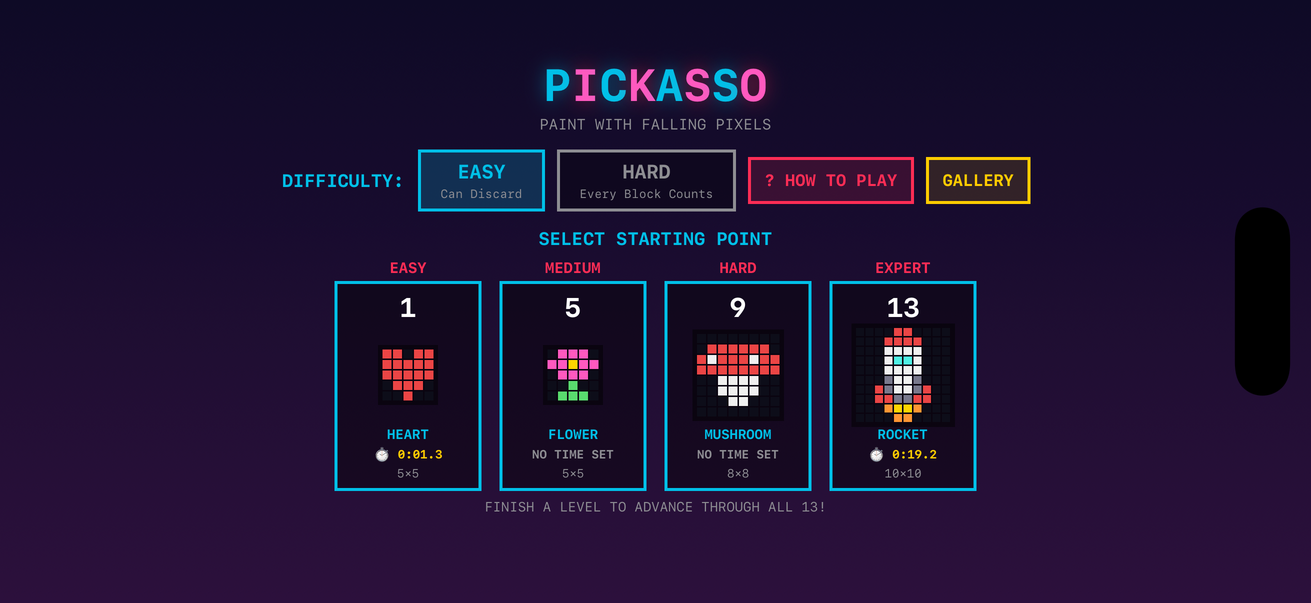
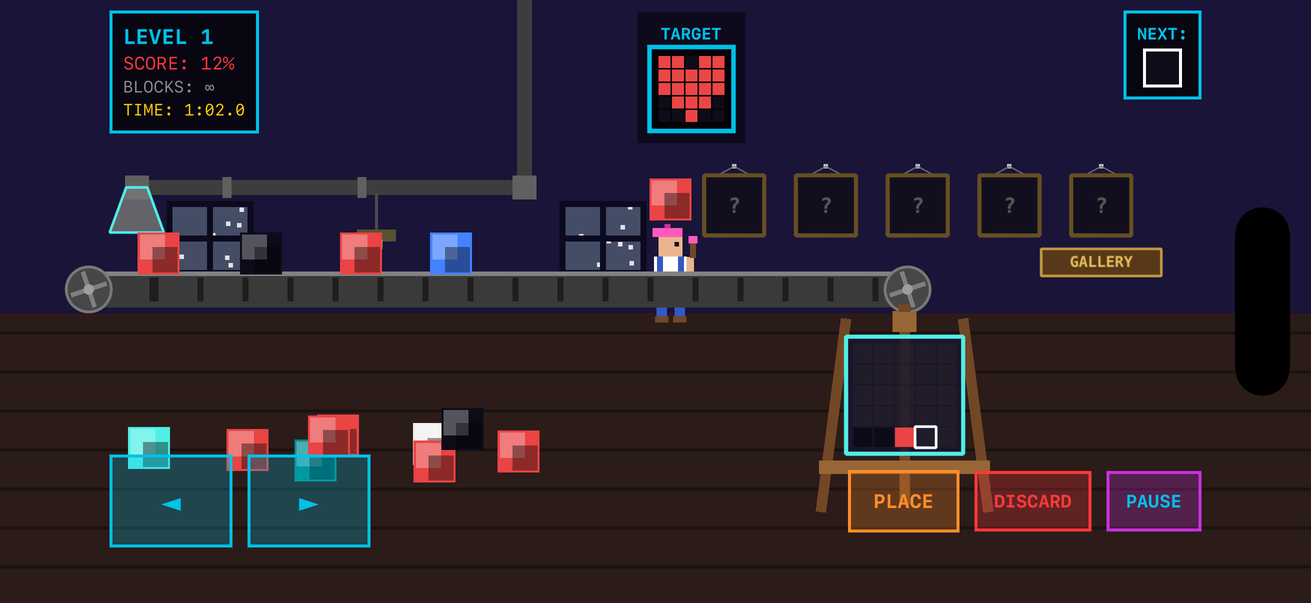
Pickasso is a retro-inspired puzzle game for iPhone and iPad. Pick blocks. Paint like Picasso. Colored pixels ride a conveyor belt, and it’s your job to catch the right ones and recreate pixel-art masterpieces – against the clock, one block at a time.
I came up with this game idea many years ago, but I just never had the time to make it happen. So, with the release of Claude Fable 5, I threw all of my ideas at it and vibe-coded the entire thing.
I’d initially tried it with Opus 4.7, but the result was absolutely unusable, nevermind playable. What Fable was able to do in a short amount of time was simply amazing.
A few highlights:
- Two ways to play – Easy mode streams endless blocks with distractor colors mixed in, and you can discard freely. Hard mode deals you exactly the blocks the image needs, shuffled, with no discards: every mistake is permanent.
- 13 hand-crafted levels – from a 5×5 two-color Heart to a 10×10 seven-color Rocket, with the belt speeding up as you go.
- Earned power-ups – place five pixels correctly in a row and a flashing tile rides the belt: Slow-Mo, Paint Bucket, Chisel, Magnet, or Preview Lens.
- Pure chiptune – all music and sound effects are synthesized live with square waves, with a fresh melody composed for every level.
- Made for touch – landscape play on iPhone and iPad with haptic feedback, on iOS 17 and up.
Pickasso is free to play, requires no account, and stores your progress only on your device. It’s currently awaiting App Store approval, so keep an eye on the Pickasso page (and this blog) for the release announcement. I’ll share some before and after shots of what it looked like with Opus 4.7 versus Fable 5 as well.
I’m currently working on obtaining the trademark for “Realistek Studios” to brand this game (and possible more) under, as a DBA for StackRef. It’s a name I’ve used for decades, though I’d never officially trademarked it. I feel the name might better suit creative endeavors like game design, movies, music, whatever.
Thanks for sticking around, and as always, you can reach us at info@stackref.com.